the perfect shot you see on the feed
What a product photography setup really looks like: 20 tripod adjustments, 6 lighting tweaks and a full shoot day, from the shot list to the final edit.
You see one photo. Clean light, the product sitting exactly where it should, a shadow that looks like it fell there by accident. You scroll past it in under a second, and that's the point. It's supposed to look easy.
Here's what that second took. On one of our shoots, the hero frame took 20 tripod adjustments and 6 lighting tweaks before we called it done. Nobody planned to count. I kept saying "one more time", and at some point the team started keeping score.
can we do it one more time?
the setup is half the shoot
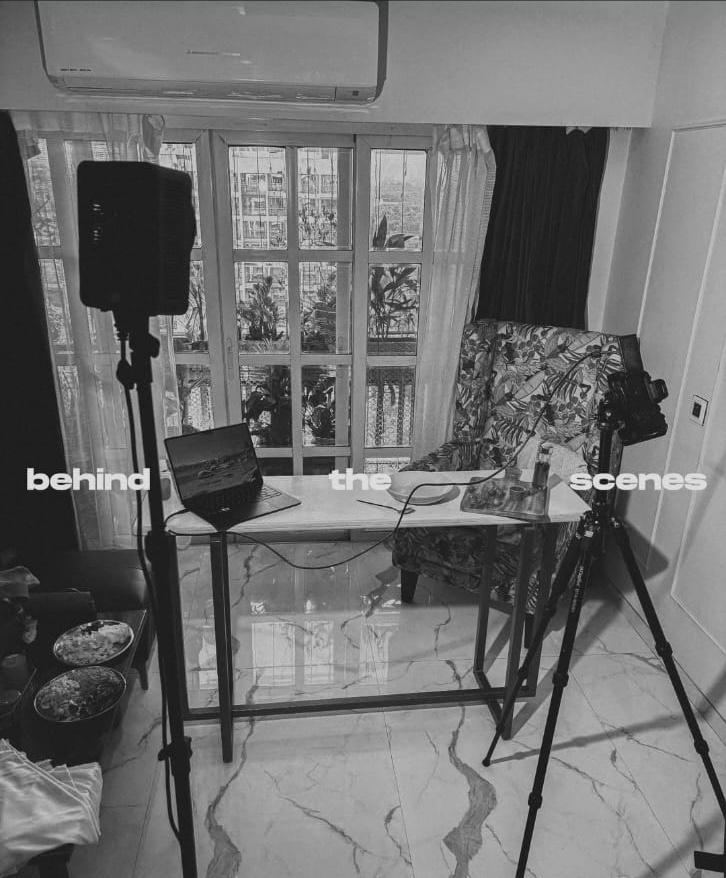
A lot of product shoots don't happen in a big studio. The photo at the top of this post is a flat in Mumbai: a marble table pulled away from the window, a laptop tethered to the camera, curtains half drawn, lights on stands wherever they fit.
A basic product photography setup has five parts, and you can build it almost anywhere:
- A surface. A table, a sheet of board, a slab of stone, anything with a texture that suits the product.
- A backdrop. Paper, fabric, a painted board or a plain wall. It decides the colour around the product.
- One main light. A window works. A continuous LED or a strobe with a softbox gives you control the sun won't.
- Something to bounce or block light. White card fills shadows in, black card makes them deeper.
- A tripod. It keeps the frame fixed while you move everything else.
That last one matters more than people think. Once the camera is locked, every change you make is to the light or the product, so you can see exactly what each change did.
where the 20 tripod adjustments go
Tripod moves sound fussy until you put the frames side by side. Two centimetres lower and the label reads straight on, with no lean at the edges. A small tilt and the line of the table stops fighting the edge of the frame. Pull back a little and the product has enough room around it to crop a 4:5 feed post and a 9:16 story from the same shot.
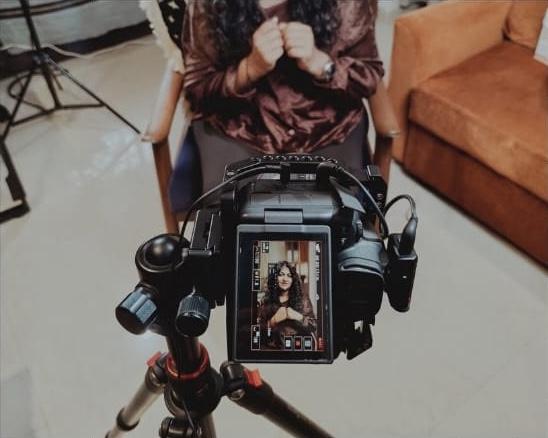
We shoot tethered, so every frame comes up big on the laptop. Things you'd never spot on the camera's little screen show up straight away: a crease in the backdrop, dust on the cap, the softbox reflected right across the logo.
every fix on set = one less hour in photoshop
Photoshop can fix a lot. Fixing it on set is still faster, and the photo holds up better when a buyer zooms in on your product page.
6 lighting tweaks, and why
Light is where most of the time goes. For a hard-light shot like this sunscreen tube, we start with one light from the side and keep adjusting until the shadow does the composing.
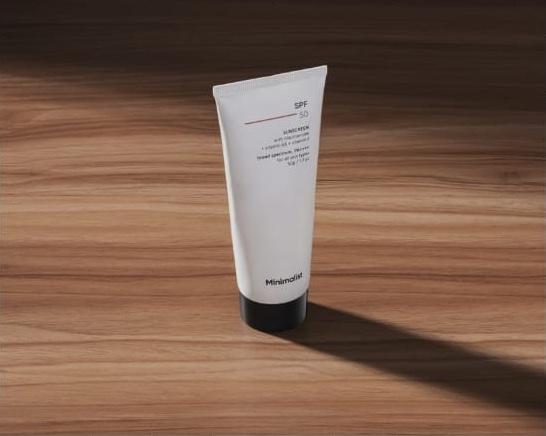
The six tweaks on a shot like this usually go something like:
- Move the light lower, so the shadow gets longer.
- Pull it further away, so the edge of the shadow gets sharper.
- Turn it slightly off the product, so the white tube doesn't blow out.
- Add a white card on the dark side, so the text on the tube stays readable.
- Swap in a smaller card when the fill starts to look flat.
- Shift the whole set back a hand's width, so the wood grain catches the light.
None of these is clever on its own. Each one fixes one small thing, and the photo you end up seeing is all six stacked on top of each other. You can see more of this in our one tube, one shadow study.
what a shoot day actually looks like
For a product shoot, a day with us runs roughly like this:
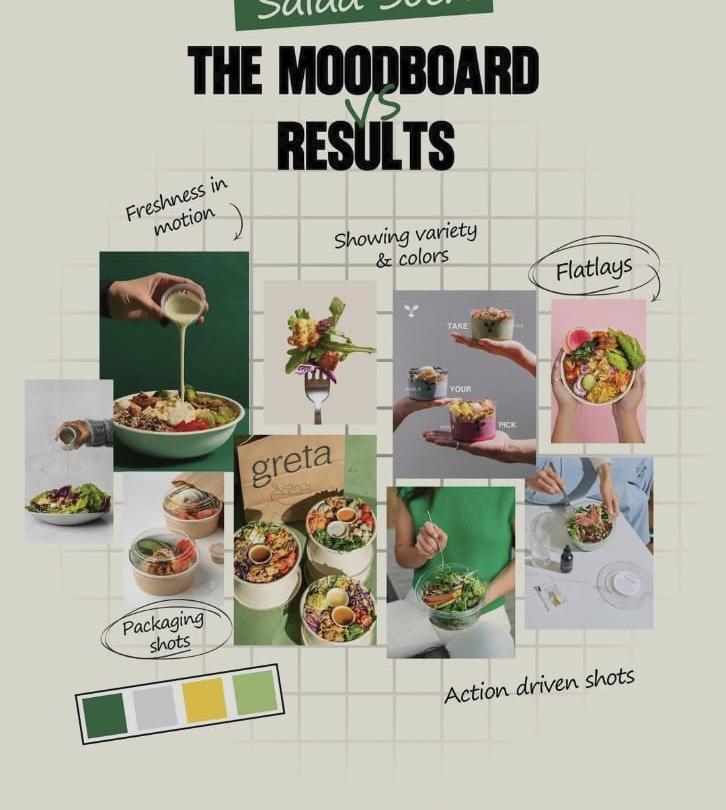
- Before the day: a shot list agreed with you, a moodboard, and the products cleaned and prepped. Spare units come along in case one gets scratched.
- Setup: an hour or so to build the set, test the light and lock the first frame.
- Hero shots first, while the product is spotless and everyone is fresh.
- Then details: textures, close-ups, the cap, the label, the stitching, the bit nobody notices until it's missing.
- Then lifestyle and motion: hands, pours, and a quick reel if it's on the list.
- Wrap: a rough pass through the selects on the laptop before we pack, so nothing gets missed.
Then comes the edit. We cull, correct colour, clean up dust and stray threads, and match every frame so the whole set looks like one family on your website or marketplace listing.
why bother
Your product gets judged before anyone reads about it. On a phone, a buyer gives a photo a second, maybe two. If the light is flat or the label is crooked, they won't zoom in to give you the benefit of the doubt. They'll keep scrolling.
So yes, we'll ask to do it one more time. It's usually worth it.
your turn;
Need product photos that hold up when someone zooms in? Tell us what you sell and we'll plan the shoot with you.